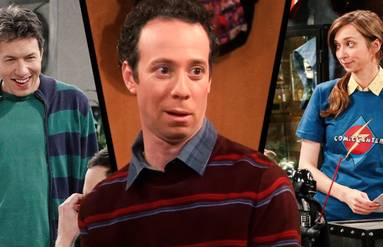
Stuart’s comic book store was never more than a backdrop in The Big Bang Theory, a dimly lit refuge for misfits and collectors. Now, in a bold twist, that same underdog is center stage—trying to save the universe and failing spectacularly. The first look at the Big Bang Theory spinoff focused on Stuart Bloom reveals a show that’s less about quantum physics and more about existential dread wrapped in sarcasm and superhero paraphernalia.
This isn’t the Sheldon-led universe fans know. It’s grittier, quieter, and far more introspective. And yet, it’s still unmistakably part of the Big Bang DNA—just filtered through the lens of the character who always sat on the sidelines.
From Background Joke to Lead Protagonist
Stuart, played by Kevin Sussman, was never meant to carry a series. Introduced as the perpetually anxious, financially strained owner of The Comic Book Store, he existed primarily as comic relief—a foil to the main group’s confidence and scientific arrogance. But behind his awkward demeanor was a depth the original show only hinted at.
Now, in this new spinoff, that depth is mined. The series opens with Stuart in his mid-40s, still running the same struggling store, but now facing eviction. In a surreal turn, a collapsing multiverse sends a dying version of himself through a time rift, warning that a cosmic imbalance—sparked by the absence of “emotional intelligence” in the universe’s coding—will erase all sentient life in 72 hours.
His mission? To fix it. His tools? A broken VR headset, a dog-eared copy of Watchmen, and his own crippling self-doubt.
The first look footage, leaked during a Warner Bros. upfront presentation, shows Stuart attempting to assemble a team of forgotten sci-fi sidekicks, including an AI recreation of Leonard Nimoy’s Spock and a disgraced NASA janitor who once accidentally recalibrated a Mars rover. None take him seriously.
“They laughed when I said I was the Chosen One,” Stuart says in a voiceover. “But no one’s laughing now. Actually, they are. They’re definitely still laughing.”
A Different Kind of Hero’s Journey
Most superhero origin stories follow a predictable arc: discovery, resistance, acceptance, triumph. Stuart Fails to Save the Universe subverts that from the start.
By the end of Episode 1, Stuart doesn’t save the world. He doesn’t even save his store. Instead, he accidentally triggers a localized reality warp that turns Pasadena into a noir-dimension where everyone speaks in 1940s detective slang. His attempt to reverse it only makes things worse.
The brilliance lies in the tonal balance. The show leans into absurdity but grounds it in real emotional stakes. Stuart isn’t just fighting cosmic collapse—he’s fighting irrelevance, loneliness, and the quiet terror of middle age with nothing to show for it.
The script, co-written by Chuck Lorre and a team of Big Bang veterans, uses science fiction not as escapism, but as metaphor. The “failing to save the universe” isn’t literal—it’s about the pressure to matter in a world that rewards brilliance over kindness, visibility over substance.
Returning Faces, New Dynamics
While this is Stuart’s story, the spinoff doesn’t ignore its roots. Jim Parsons returns as executive producer and makes a surprise cameo in Episode 3—not as Sheldon, but as a hallucination of Stuart’s subconscious, dressed as Gandalf and offering terrible advice.
Simon Helberg and Kunal Nayyar also appear in early episodes, not as Howard and Raj, but as alternate-universe versions: Howard is a feared space admiral, Raj is a silent, telepathic monk. Their scenes with Stuart are brief but charged with melancholy—echoes of friendships that drifted, of lives that diverged.
Mayim Bialik appears in a pivotal dream sequence where she plays a cosmic judge evaluating Stuart’s life worth. In true Big Bang fashion, the dialogue is a mix of neuroscience and absurdity:
“Your dopamine response to small kindnesses exceeds that of 98% of observed humans,” she says. “But your serotonin levels indicate chronic under-recognition. Verdict: inconclusive.”
The return of these actors—even in symbolic roles—anchors the show in continuity while allowing it to forge a new path.
The Visual and Narrative Style
The first look reveals a significant shift in visual tone. Gone is the bright, flat lighting of The Big Bang Theory. In its place: moody shadows, Dutch angles, and a color palette dominated by deep blues and greys—reminiscent of Legion or The Midnight Gospel.
The camera lingers on Stuart’s hands—trembling as he adjusts a circuit board, fumbling a comic book price tag, typing a doomed message into a quantum chat interface. These are small moments, but they carry weight.
The narrative structure is non-linear. Episodes jump between timelines: Stuart’s childhood, his college dropout years, the night he bought the store, and the present-day collapse. Each timeline reveals a piece of why he believes he’s incapable of heroism.
One standout sequence shows a teenage Stuart trying—and failing—to ask Penny (a background character here, seen only from behind) to prom. The rejection isn’t dramatic. She just says, “Huh? No,” and walks off. The camera holds on Stuart, frozen, as the school hallway empties around him. It’s a quiet gut punch—and exactly the kind of moment the original show would have played for laughs.
Now, it’s central to his character.
Why This Spinoff Works When Others Failed
Many spinoffs from hit sitcoms collapse under the weight of expectation. Joey failed because it stripped away the context that made the character funny. Georgie & Mandy’s First Marriage risks being too nostalgic, too safe.
Stuart Fails to Save the Universe avoids those traps by rejecting nostalgia as a crutch. It acknowledges the past but refuses to live there. Stuart isn’t trying to relive Big Bang—he’s trying to escape it.
The show also dodges the “fan service” trap. Cameos are meaningful, not gratuitous. References to past episodes exist, but they’re woven into new metaphors. For example, Sheldon’s old whiteboard reappears—not as a prop, but as a fragment of code in the collapsing universe.
This isn’t a victory lap. It’s a reckoning.
Thematic Depth: Failure as a Virtue
At its core, the spinoff asks a question rarely explored in mainstream comedy: What if the person who matters most is the one who never saved the day?
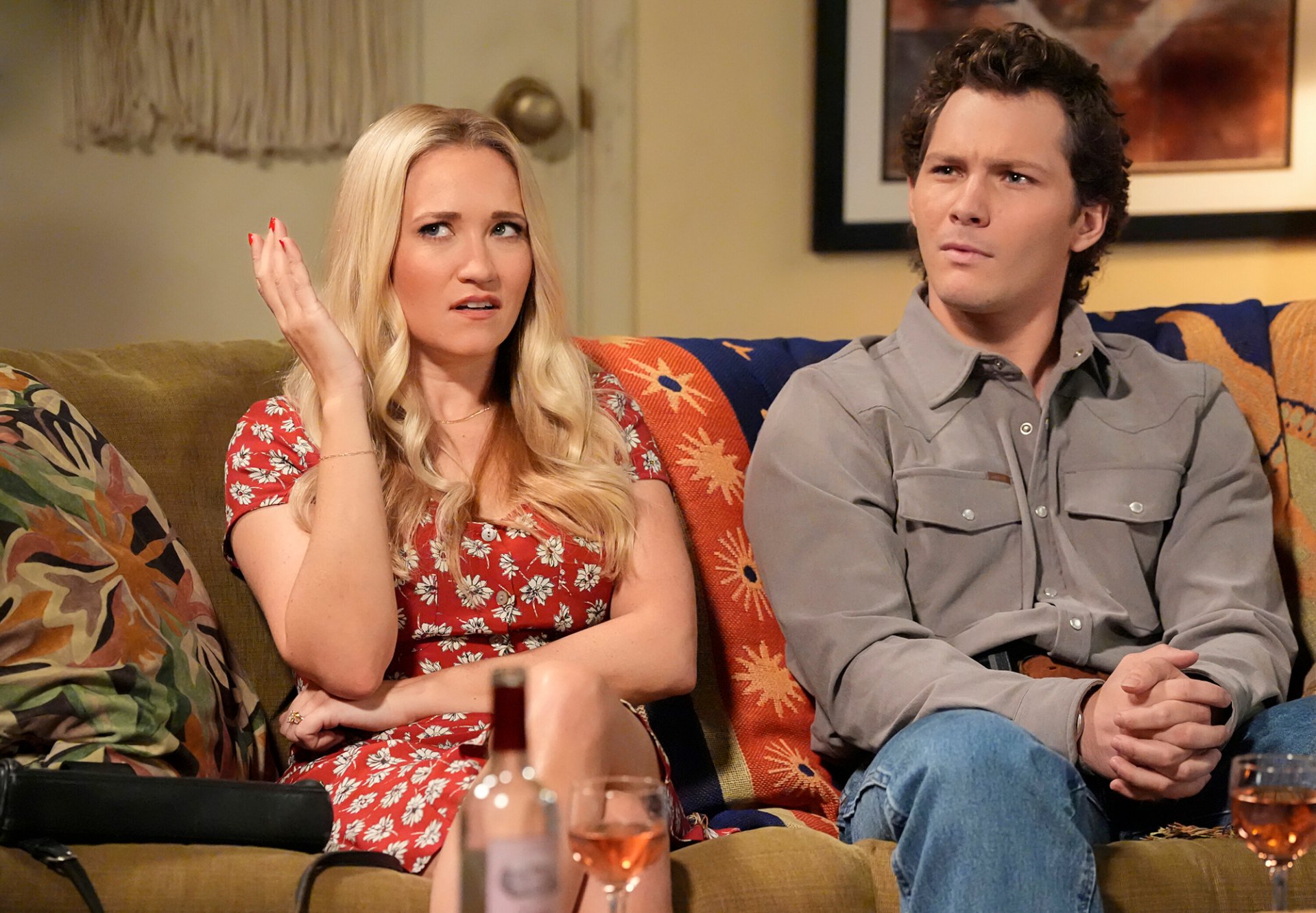
Stuart doesn’t succeed. He doesn’t stop the universe from collapsing—at least not in the traditional sense. By the season finale, he accepts that he can’t fix everything. Instead, he uses the last moments of reality to send personalized messages to everyone he’s ever known, apologizing, thanking, confessing.
One goes to Howard: “I always thought you were cooler than you knew.” Another to Bernadette: “You were the only one who ever asked if I ate today.”
The universe resets. Life returns. But no one remembers what happened—except Stuart. And he doesn’t tell them.
The final scene shows him back in the store, restocking Action Comics #1. A customer walks in. It’s young Sheldon, age 12, wearing a Flash T-shirt.
“Do you believe in heroes?” the boy asks.
Stuart smiles. “I believe in people who try.”
Production Insights and Creative Risks
The decision to make Stuart the lead was controversial behind the scenes. Test audiences for early pilots responded poorly—Stuart was “too sad,” “not funny enough,” “not smart.”
The creative team pushed back. They argued that Stuart represented a different kind of intelligence—one based on empathy, observation, and quiet resilience. They reframed the show not as a laugh machine, but as a tragicomedy about overlooked people in a world obsessed with genius.
The gamble paid off. The leaked footage generated unexpected buzz, especially among viewers tired of superhero tropes and high-IQ caricatures. Social media reactions praised the show’s “emotional honesty” and “refreshing lack of resolution.”
Even Chuck Lorre admitted in a recent interview: “We spent twelve years telling stories about people who think they’re the smartest in the room. Now we’re telling one about the guy who thought he was the dumbest—and was probably the wisest all along.”
What the First Look Tells Us About the Future
The footage confirms several key details:
- The show is set five years after The Big Bang Theory finale.
- The comic book store is on the verge of closure due to online retailers and rising rent.
- Stuart lives in the back room, surrounded by unopened collectibles.
- The multiverse plot isn’t a one-off—it’s the backbone of Season 1.
- There are no laugh tracks. The silence is deliberate.
The tone is more Ted Lasso meets Russian Doll than Two and a Half Men. It’s a comedy where the biggest punchline is the futility of trying—and the courage it takes to try anyway.
A New Chapter for Geek Culture on TV
Stuart Fails to Save the Universe doesn’t just continue the Big Bang legacy—it critiques it. The original show celebrated intellect but often mocked emotional vulnerability. This spinoff flips the script.
It suggests that saving the universe might not require a Nobel Prize—just someone willing to care deeply, even when no one’s watching.
In a media landscape saturated with genius protagonists and world-saving arcs, Stuart’s failure is radical. Because for the first time, failure isn’t a setup for redemption. It’s the point.
And in that, the show feels not just original, but necessary.
Watch for the premiere on CBS this fall—where the biggest hero isn’t the one who saves the universe, but the one who keeps showing up, even when he knows he’ll fail.
FAQ
What should you look for in Big Bang Theory Spinoff: Stuart Fails to Save the Universe First Look? Focus on relevance, practical value, and how well the solution matches real user intent.
Is Big Bang Theory Spinoff: Stuart Fails to Save the Universe First Look suitable for beginners? That depends on the workflow, but a clear step-by-step approach usually makes it easier to start.
How do you compare options around Big Bang Theory Spinoff: Stuart Fails to Save the Universe First Look? Compare features, trust signals, limitations, pricing, and ease of implementation.
What mistakes should you avoid? Avoid generic choices, weak validation, and decisions based only on marketing claims.
What is the next best step? Shortlist the most relevant options, validate them quickly, and refine from real-world results.