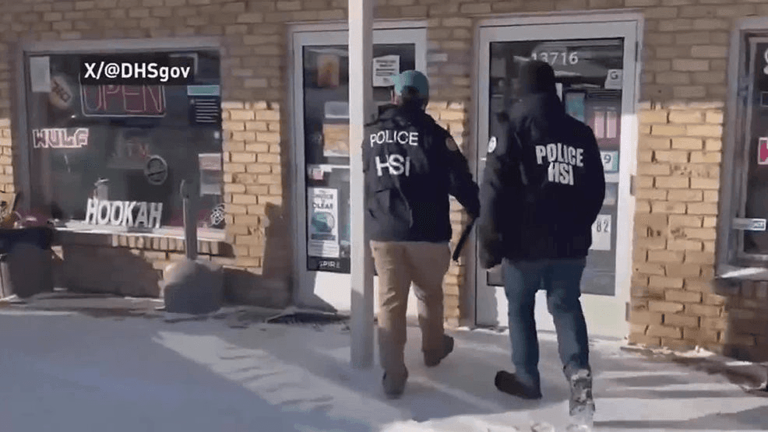
Federal law enforcement agencies executed a series of coordinated raids across Minnesota targeting an alleged organized network involved in large-scale fraud. At the center of the investigation: individuals linked to Minnesota’s Somali community accused of exploiting government programs through identity theft, synthetic identities, and benefits fraud. These operations, led by the FBI, U.S. Marshals, and Homeland Security Investigations (HSI), signal a broader federal crackdown on organized fraud rings with cultural and community-specific dynamics.
The raids, concentrated in the Twin Cities metro—especially Minneapolis neighborhoods like Cedar-Riverside and Phillips—disrupted a sophisticated criminal ecosystem. While federal authorities avoid sweeping generalizations, public records and law enforcement statements confirm that suspects used stolen personally identifiable information (PII) to file fraudulent claims for unemployment, tax refunds, and public housing. The investigation reveals systemic vulnerabilities in federal benefit distribution and identity verification systems.
The Scope of the Minnesota Somali Fraud Raids
Over two dozen search warrants were executed in a single operation, resulting in multiple arrests and the seizure of electronic devices, counterfeit documents, and cash. According to affidavits filed in U.S. District Court, suspects used real and synthetic identities—often blending stolen Social Security numbers with fictitious names—to establish eligibility for benefits.
One case involved a suspect who allegedly filed over 40 false tax returns using identities of minors and deceased individuals. In another, investigators uncovered a scheme where fraudulent applications for Minnesota Housing Finance Agency (MHFA) support were submitted using forged employment records and fake rental agreements.
“This wasn’t random theft,” said a senior agent involved in the investigation, speaking on background. “This was organized, persistent, and in some cases, intergenerational—where younger individuals were taught how to game the system by older community members.”
The operation reflects a pattern observed in federal fraud enforcement: clusters of criminal behavior emerging within tight-knit immigrant communities, often enabled by shared language, trust networks, and limited oversight.
How the Fraud Network Operated
At its core, the alleged Somali fraud network relied on three interlocking strategies:
- Identity Harvesting: Suspects collected PII through data breaches, dark web purchases, or theft from individuals within their communities. Children, elderly, and homeless individuals were frequent targets due to low credit activity and delayed detection.
- Synthetic Identity Creation: Using real SSNs and fake names, scammers built credit histories over months or years. Once established, they “busted out”—maxing out credit lines and disappearing.
- Benefits Exploitation: Applications for unemployment insurance (especially during pandemic expansions), EBT cards, housing subsidies, and free cellphones (via the Lifeline program) were filed using these fabricated profiles.
A forensic review of seized devices revealed templates for forged pay stubs, rental agreements, and even fake medical documentation. Some suspects operated from residential homes turned into document mills—complete with laminators, scanners, and pre-filled government forms.
“These weren’t just people committing fraud on the side,” said a federal prosecutor. “We’re seeing business models built around defrauding government systems.”
Why Minnesota Became a Hotspot
Minnesota, particularly Minneapolis, hosts one of the largest Somali populations in the U.S.—estimated at over 50,000. The community’s growth since the 1990s has been marked by both resilience and socioeconomic challenges, including high unemployment and language barriers.
Those same conditions created fertile ground for fraud. Limited access to formal credit, banking, or employment pushed some toward illicit alternatives. In certain circles, benefit fraud became normalized—seen not as crime, but as survival.
Moreover, lax verification processes during emergency programs like Pandemic Unemployment Assistance (PUA) opened floodgates. Between 2020 and 2022, Minnesota paid out over $7.5 billion in unemployment benefits, with an estimated $1.2 billion in fraudulent claims—some of the highest rates per capita in the nation.
Federal investigators found that fraudsters exploited this moment of crisis, rapidly scaling operations when oversight was weakest.
Law Enforcement Coordination and Tactics
The raids were the culmination of a 28-month investigation led by the FBI’s Minneapolis Field Office, in coordination with HSI, the U.S. Attorney’s Office for Minnesota, and local agencies like the Hennepin County Sheriff’s Office.
Key tactics included:
- Financial Pattern Analysis: Tracking bank deposits, wire transfers, and prepaid card usage to identify clusters of suspicious activity.
- Surveillance and Informants: Physical and digital surveillance, paired with community-based informants, helped map the network.
- Digital Forensics: Extracted data from phones and computers revealed encrypted messaging threads discussing fraud techniques.
- Cross-Jurisdictional Collaboration: Agents worked with counterparts in California, Washington, and Georgia, where some suspects had connections.
Search warrants were timed for early morning to reduce escape risk, with tactical teams executing entries simultaneously across locations. No shots were fired, but several suspects attempted to destroy evidence—flushing documents, wiping hard drives, or smashing phones.
One tactical innovation involved using algorithmic clustering to detect anomalies in benefit applications. By analyzing ZIP codes, IP addresses, and device fingerprints, investigators flagged applications with identical formatting, submission times, or digital signatures.
Legal Charges and Consequences
Those arrested face a mix of federal charges, including:
- Wire fraud
- Identity theft
- Aggravated identity theft (a mandatory 2-year sentence upon conviction)
- Conspiracy to defraud the United States
- Money laundering
Convictions could carry sentences of 10 to 20 years, depending on the scale and leadership role. In past cases, even mid-level participants have received 5–7 year sentences.
Beyond incarceration, defendants face asset forfeiture, restitution orders, and deportation if undocumented. For those with lawful status, fraud convictions can trigger removal proceedings under immigration law.
The U.S. Attorney’s Office has emphasized that prosecutions will not target the Somali community broadly but focus on individuals with documented criminal conduct.
“We are not criminalizing poverty or culture,” said U.S. Attorney Rachel Paulose. “We are prosecuting people who deliberately stole from systems meant to help the vulnerable.”
Challenges in Prosecution and Community Response
Despite the legal momentum, the investigation walks a delicate line. Community leaders have criticized heavy-handed tactics, warning that raids can fuel mistrust and stigmatize entire populations.
“We know crime exists in every community,” said Abdirizak Bihi, a Somali-American activist in Minneapolis. “But when raids are publicized with photos of handcuffed Somali men, it reinforces stereotypes and undermines integration.”
Others point to systemic failures: Why were verification systems so weak during PUA? Why weren’t red flags addressed earlier?
Federal agencies counter that they followed due process, and that publicizing the raids serves as deterrence. Still, some officials acknowledge the need for better outreach—offering pathways for at-risk youth and strengthening cultural competency in investigations.

A pilot program, launched in partnership with community organizations, now offers fraud education workshops in Somali-language media. The goal: prevent future involvement by increasing awareness of consequences and legal alternatives.
Broader Implications for National Fraud Enforcement
The Minnesota raids are part of a national trend. The U.S. Secret Service, FBI, and Treasury have all identified organized fraud networks—often ethnically or geographically concentrated—as a top threat to financial integrity.
Similar operations have targeted:
- Cuban and Haitian fraud rings in Florida (Medicaid and EBT fraud)
- Chinese networks in California (synthetic identities and credit fraud)
- Nigerian groups across multiple states (advance-fee and romance scams)
What sets the Minnesota case apart is the intersection of immigration, welfare policy, and digital fraud. It underscores a critical gap: federal programs designed for accessibility often lack the fraud detection infrastructure to prevent abuse at scale.
Moving forward, agencies are pushing for:
- Real-time identity verification using biometrics and AI
- Inter-agency data sharing between SSA, IRS, and state agencies
- Strengthened anti-fraud training for caseworkers
- Increased collaboration with immigrant community leaders
But technology alone won’t solve the problem. Without addressing root causes—economic exclusion, digital illiteracy, and lack of opportunity—fraud will continue to mutate and adapt.
What Comes Next
The Minnesota raids have disrupted a major fraud network, but they are not the end. Federal prosecutors expect dozens more indictments in the coming months. Civil lawsuits and benefit clawbacks are also underway, with the state demanding repayment from fraudulent recipients.
For law enforcement, the case offers a blueprint: combine data analytics with boots-on-the-ground intelligence. For policymakers, it’s a warning: emergency programs must be built with fraud resistance from day one.
For the Somali community in Minnesota, the moment is one of reckoning. While most are law-abiding and contribute deeply to society, the actions of a criminal few have lasting consequences.
Prevention must now take center stage—through better financial education, community policing, and inclusive economic development. Because when systems fail, people lose trust. And when trust erodes, entire communities pay the price.
Closing this chapter requires more than arrests. It demands accountability, reform, and a shared commitment to integrity.
Frequently Asked Questions
What triggered the federal raids in Minnesota? A surge in suspicious benefit claims—especially during the pandemic—led to data analysis that uncovered patterns of fraud tied to specific networks, prompting a formal investigation.
Are all Somali individuals in Minnesota under suspicion? No. Federal authorities stress that investigations target specific criminal conduct, not entire communities. The raids focused on individuals with documented involvement in fraud.
What types of fraud were involved? Primary schemes included identity theft, synthetic identity creation, unemployment fraud, tax refund fraud, and misuse of housing and food assistance programs.
How many people were arrested? Initial raids resulted in over 20 arrests, with more expected as the investigation continues.
Can someone be prosecuted for using a fake identity to get benefits? Yes. Filing false claims with the government is a federal crime, punishable by fines, imprisonment, and restitution.
Will those who received benefits fraudulently have to pay them back? Yes. State and federal agencies are actively pursuing repayment through audits, liens, and legal action.
How can communities prevent fraud? Through education, outreach, and partnerships with law enforcement to report suspicious activity without fear of collective punishment.
FAQ
What should you look for in Federal Raids Target Somali Fraud Network in Minnesota? Focus on relevance, practical value, and how well the solution matches real user intent.
Is Federal Raids Target Somali Fraud Network in Minnesota suitable for beginners? That depends on the workflow, but a clear step-by-step approach usually makes it easier to start.
How do you compare options around Federal Raids Target Somali Fraud Network in Minnesota? Compare features, trust signals, limitations, pricing, and ease of implementation.
What mistakes should you avoid? Avoid generic choices, weak validation, and decisions based only on marketing claims.
What is the next best step? Shortlist the most relevant options, validate them quickly, and refine from real-world results.